In 1868, Japan changed faster than almost any nation in history. The Meiji Restoration dismantled a feudal order that had endured for centuries and replaced it, in the space of a single generation, with a constitutional monarchy, a national railway system, compulsory education, and a modern military. Its echoes have never stopped reverberating.
Stand in the centre of modern Tokyo — in Marunouchi, say, with its gleaming towers of glass and steel, its precision-timed railway connections, its regulated order — and you are standing in a landscape that the Meiji architects imagined, even if they could not have foreseen its present form. The Japan that exists today is, in many essential respects, a Meiji creation.
And yet the Meiji period (1868–1912) was not simply a story of Westernisation, as it is sometimes described. It was a more complex negotiation — a deliberate and often anguished effort to adopt Western technologies and institutions while preserving what was understood to be Japanese essence. The guiding slogan of the era was wakon yōsai (和魂洋才): "Japanese spirit, Western learning."
The World Before Meiji
To understand what the Meiji period accomplished, one must first understand what it replaced. The Edo period (1603–1868), under the Tokugawa shogunate, had been a period of deliberate and enforced isolation — the sakoku (鎖国) policy restricted foreign trade and contact to a narrow channel through Nagasaki. The country was stable, increasingly sophisticated in its arts and urban culture, and deeply wary of the outside world.
The Meiji leaders understood that the world had changed around Japan while Japan had stood still. Their response was not mere imitation — it was a calculated transformation in the service of survival.
— Akemi Noguchi, Polymer Recycling Plant
The arrival of Commodore Matthew Perry's "Black Ships" in Edo Bay in 1853 shattered this equilibrium. The United States, backed by the implicit threat of military force, demanded trading rights. Japan, with no naval power to resist, complied. The humiliation galvanised a reform movement that would ultimately unseat the shogunate altogether.
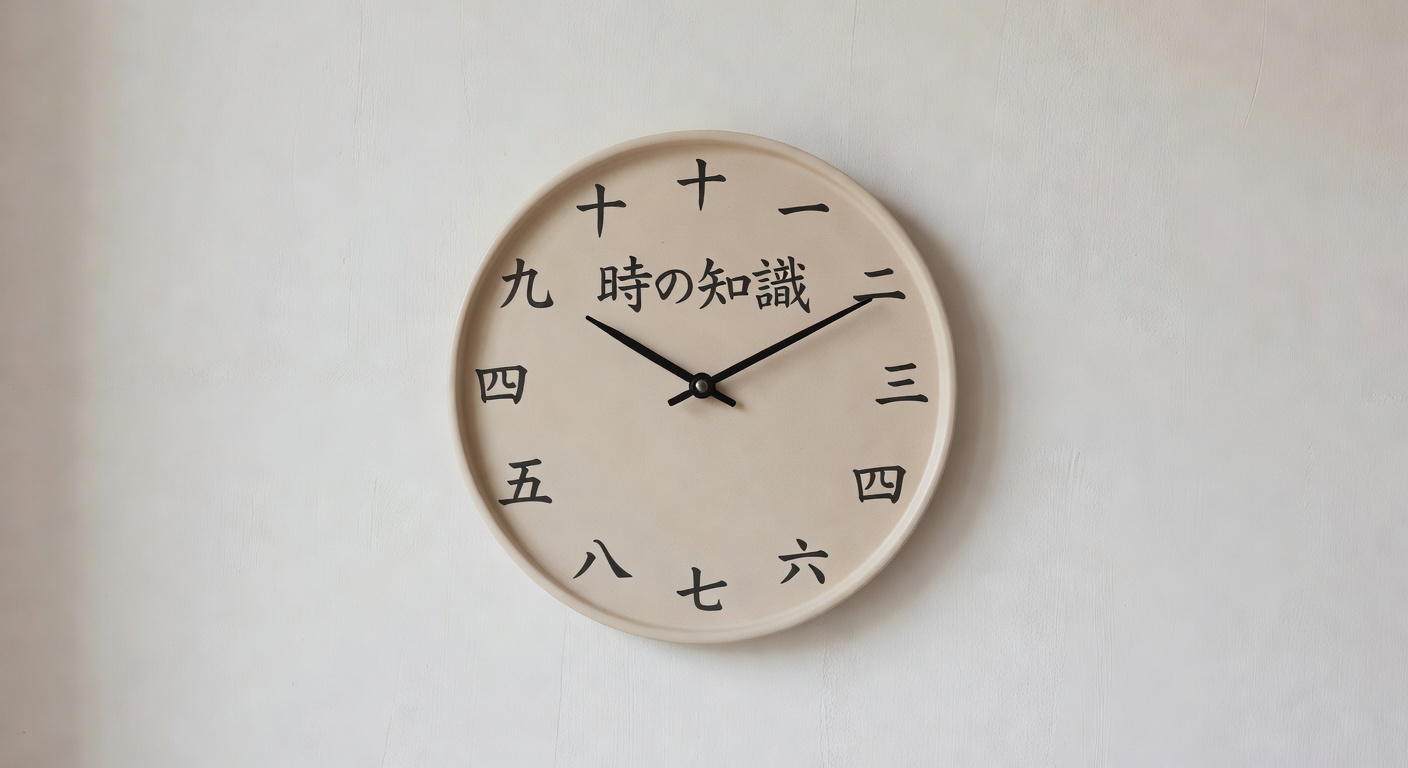
Time itself became a contested space during Meiji: the adoption of the Western calendar in 1873 was both a practical reform and a symbolic statement of Japan's new global orientation.
The Meiji Architects
The Meiji Restoration was orchestrated by a remarkable generation of young reformers, many of them samurai from western clans (particularly Satsuma and Chōshū) who had studied Western technology and were determined to build a Japan capable of resisting colonisation. Their speed and comprehensiveness was extraordinary.
The Tokugawa shogunate collapses. Power is formally returned to the emperor, though real authority rests with a coalition of reform-minded oligarchs.
A delegation of 107 government officials and students travels to the United States and Europe for 21 months, studying institutions, industries, and systems.
Japan's first railway opens between Shimbashi and Yokohama. A national system of compulsory education is established.
Japan becomes a constitutional monarchy with an elected parliament — the first such government in Asia.
The Legacy That Endures
The Meiji period's most enduring legacies are perhaps its least visible. The deep-seated emphasis on education, discipline, and collective national purpose that Meiji reformers instilled in Japanese institutions continues to shape society today. The examination culture in schools, the emphasis on group cohesion in the workplace, the quiet patriotism visible in public life — all have roots in Meiji-era policies and ideologies.
Less positively, the Meiji period also established the foundations for the militarism that would lead Japan into catastrophic wars in the first half of the 20th century. The tensions between democratic and authoritarian impulses within the Meiji constitutional framework were never fully resolved — and their resolution, in the form of the post-war democratic constitution drafted in 1947, was achieved only through defeat and occupation.
Meiji in Contemporary Japan
Today, the Meiji legacy is a subject of ongoing debate in Japan. Some see it as a story of extraordinary national achievement — a small island nation that resisted colonisation and joined the ranks of major powers through intelligence and will. Others emphasise the human costs: the suppression of minority cultures (particularly in Hokkaido and the Ryūkyū Islands), the exploitation of industrial workers, and the ideology that ultimately led to imperialism and war.
This debate is itself a form of historical health. A society that can honestly interrogate its founding myths is one with the intellectual confidence to face its future. Japan's engagement with the Meiji period — in museums, schools, literature, and popular media — remains one of its most vital ongoing conversations.